When dealing with limited space in a small bathroom, optimising every element becomes crucial, including the radiator. A well-chosen radiator can not only provide warmth but also enhance the style of your bathroom.
The challenge lies in selecting a radiator that fits the space while maintaining efficient heat output. With a variety of designs available today, there’s no need to sacrifice functionality for aesthetics.
Choosing the right radiator can make a significant difference in a small bathroom, especially when you consider both heat and space-saving options. By carefully selecting a model suited to your needs, you can enjoy a warm and stylish bathroom without feeling cramped.
This blog will guide you through key factors to consider, from heat output to design features, so you can make the best choice for your space.
Understanding the Size and Heat Output
One of the most important considerations when choosing a radiator is ensuring it has the right heat output for your space. Heat output is measured in BTUs (British Thermal Units), which indicates how much heat the radiator will provide.
For small bathrooms, you’ll need to calculate the correct BTU to avoid installing a radiator that’s either too weak or unnecessarily powerful. Several online BTU calculators can help you make this decision based on room size and window placement.
Compact radiators are often designed to provide high heat output despite their small size. Many models use modern heating technology to maximise efficiency, ensuring your small bathroom is heated quickly and evenly.
Choosing a radiator with the appropriate BTU rating will keep your space comfortable without taking up excessive room.

Wall-Mounted vs. Freestanding Radiators
In small bathrooms, wall-mounted radiators are a popular choice as they help save valuable floor space. These radiators can be installed on unused sections of wall, allowing you to keep the floor clear for other essential fixtures.
Wall-mounted designer towel rails, in particular, can provide both warmth and the convenience of drying towels without cluttering your bathroom.
Freestanding radiators, on the other hand, may still be an option for some small bathrooms, particularly if you have an awkward layout or prefer a more traditional design.
However, they do take up floor space, so consider how much room you have before opting for this style. In most cases, wall-mounted designs are better suited to smaller bathrooms due to their space-saving qualities.
Vertical Radiators: A Game-Changer
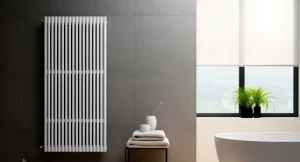
Vertical radiators are an excellent option for small bathrooms, as they allow you to make the most of your wall space. By positioning the radiator vertically, you free up more horizontal space, which can be used for other bathroom fittings.
Vertical radiators are particularly effective when wall space is limited, and they can be just as efficient at heating the room as their horizontal counterparts.
These radiators also come in a wide range of styles, so you don’t have to compromise on aesthetics. Sleek and contemporary, vertical radiators can add a modern touch to any bathroom while keeping it warm.
This design solution maximises space and adds a stylish focal point to your bathroom.
Choosing the Right Design and Material
Material choice is another important factor when selecting a radiator for a small bathroom. Aluminium radiators, for example, are lightweight and have excellent heat conductivity, meaning they warm up quickly and efficiently.
This makes them ideal for small spaces where you want the room to heat up as soon as possible. Steel radiators, while slower to heat, retain warmth longer, making them another viable option depending on your heating needs.
Design is equally important when considering how the radiator will fit within your bathroom. Opting for slim, minimalist designs can help maintain the feeling of space in smaller rooms.
Radiators with additional features, such as integrated towel rails, can also be a great space-saving solution, combining heating and towel drying functions in one.
Practical Installation Tips
Placement is key to maximising space and efficiency when installing a radiator in a small bathroom. It’s essential to place the radiator in a spot where it can heat the room effectively, but also where it won’t interfere with bathroom fixtures.
Common locations include beneath windows or on a narrow section of wall. Towel rails installed near the shower or bath offer convenience while keeping towels warm and dry.
Another consideration is whether to install an electric radiator or a plumbed-in model. Electric radiators can be more flexible regarding placement, as they don’t rely on existing pipework, making them ideal for bathroom renovations.
Whichever option you choose, ensure you hire a professional installer to handle the electrical aspects and guarantee safety in the bathroom environment.

Conclusion
Choosing the right radiator for a small bathroom requires careful consideration of heat output, design, and space constraints. By opting for compact, efficient models, you can ensure your bathroom is both warm and stylish.
Remember, the best radiator is one that not only fits the available space but also meets your heating requirements.
Explore vertical radiators and wall-mounted options to maximise your bathroom’s potential. With the right design, you’ll enjoy a perfectly heated bathroom without sacrificing any space, ensuring both comfort and practicality.